
The CEO’s Most Overlooked Responsibility? Creating Space to Think
To You, My Thinking Partner
The leaves are turning, the air is crisp, and the evenings are drawing in. Autumn always invites reflection — a pause before renewal.
As the year closes, I’ve been asking myself: What do I want to leave behind in 2024 — and what do I want to nurture into 2025? This season, I’m keeping a list — things to learn, do, and experience, both shared and personal. It’s a simple but powerful act of clarity — something every leader benefits from.
What’s on your list? I’d love to hear.
Thought for Today
On Monday, my husband and I went to see Tommy Tiernan and Martin Shaw’s Between Dog and Wolf — a darkly funny exploration of Irish storytelling. Two reminders stayed with me:
Laughter resets perspective — something every leader needs.
Coincidence often feels like magic. We’d booked late, sat apart, and yet the couple beside me were friends we’d met months earlier.
Sometimes the unexpected connection is the most human one — at work and in life.
Insights from the Work — Creating Thinking Environments at the Top Table
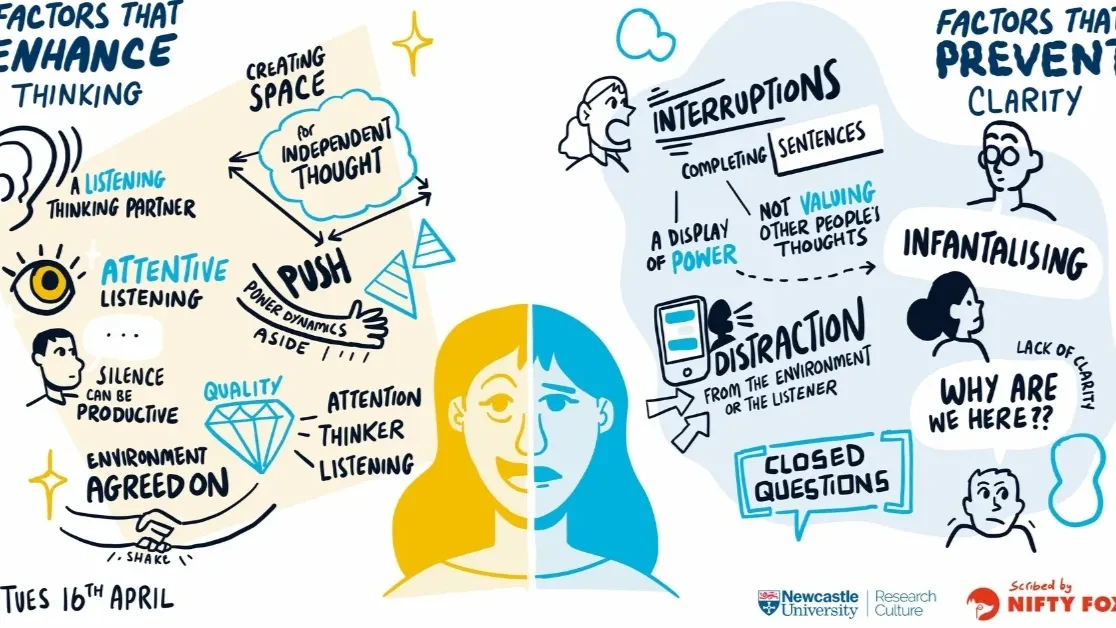
In a world where pace and pressure dominate, one of the CEO’s most overlooked responsibilities is creating space for thinking. The culture of a senior team is shaped less by what’s on the agenda and more by how the room thinks together.
Here are three practices that make a real difference:
Leave more space in the agenda. When every minute is filled, thinking narrows. Build pauses between topics, resist rushing decisions, and create time for reflection. Silence isn’t wasted — it’s the oxygen of better judgment.
Introduce Rounds. Invite each person to speak without interruption for two or three minutes on a key question. It slows the tempo, deepens listening, and brings out the quieter — often wisest — voices.
Establish a Thinking Council. Use this method to support strategic conversations. The Chair poses a key question, and each participant offers their thoughts in turn — uninterrupted. The group listens attentively, noting patterns, insights, and potential actions. No presentations, no hierarchy — just open inquiry and collective exploration.
These approaches shift a team from doing to thinking, and from reacting to leading. The result? Clearer priorities, stronger relationships, and a culture where everyone’s thinking is valued.
Insights from the Field — Leading Teams Through Change
September brought two very different team offsites:
A newly formed senior leadership team following a three-country merger.
A team I meet quarterly to review OKRs and momentum.
One was in forming — learning to connect and build trust. The other was deep in storming — navigating accountability and identity. Both reminded me that leadership teams grow through the same stages as people — and that the real work lies in creating space to think, speak honestly, and reset together.
How I support teams to make that shift:
Clarify purpose and design with intention.
Build a thinking environment where every voice matters.
Ask what’s being left unsaid.
Close with alignment, actions, and accountability.
Teams don’t just need facilitation — they need space to think clearly, together.
Looking Ahead — Scaling with Impact
Many CEOs tell me scaling feels complex — strategy pulls in one direction, culture in another. I’m shaping a new annual programme that integrates strategy, leadership growth, and accountability — helping leaders scale with clarity and intention.
If that resonates, I’d love your input: what’s your biggest challenge in scaling right now?
Thank you for reading — and for being part of this thinking community. Here’s to an October filled with confidence, connection, and bold, thoughtful leadership.
With warmth, Elaine
